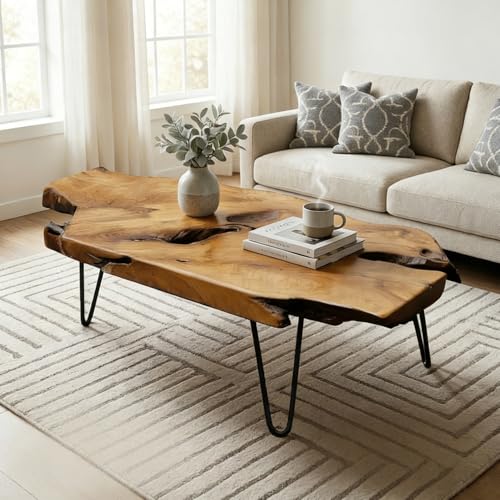
Why Choose a Live Edge Wood Coffee Table?
A live edge wood coffee table is more than just furniture; it's a statement piece. It brings an unparalleled sense of warmth, character, and organic sophistication to any room. Unlike mass-produced tables with perfect, uniform edges, a live edge table showcases the wood's natural history. Every knot, crack, and curve is part of its unique story, making it a true conversation starter.
These tables work beautifully in a variety of interior design styles. They are the perfect complement to mid-century modern spaces, adding a warm organic element to clean lines. In a farmhouse or rustic setting, they amplify the natural, lived-in feel. They also create a stunning focal point in minimalist or industrial interiors, softening the space with their natural texture.
Choosing the Right Wood & Style
Selecting the perfect live edge coffee table involves considering the type of wood, the thickness of the slab, and the overall aesthetic. Popular wood choices include walnut, known for its rich, dark chocolate tones; oak, prized for its durability and prominent grain; and maple, which offers a lighter, cleaner look. The solid wood construction ensures longevity and a premium feel.
Consider the shape and size of the slab. A long, rectangular slab works well in larger living rooms, while a round or oval shape can soften a more compact space. The thickness of the wood also contributes to the table's presence—a thick, chunky slab creates a bold, substantial look, while a thinner slab offers a more refined, elegant feel. For a similar organic but more refined look, you might also explore options like a round wood coffee table with a glass top which offers a different take on natural materials.
💡 Styling Your Live Edge Coffee Table
Let the table be the star. Keep the decor simple and natural. A few well-chosen items like a ceramic vase, a stack of art books, or a simple tray can complement the wood's beauty without overwhelming it. The key is to enhance, not compete with, the organic form.
Care & Maintenance
Proper care will ensure your live edge table remains a cherished piece for years to come. The most critical aspect is managing humidity. Wood is a hygroscopic material, meaning it expands and contracts with changes in moisture. To prevent cracking or warping, it's essential to maintain a stable indoor environment.
Dust your table regularly with a soft, dry cloth. For cleaning, use a slightly damp cloth and immediately dry the surface. Avoid harsh chemicals or abrasive cleaners. To protect the finish and keep the wood hydrated, apply a high-quality furniture wax or oil specifically designed for live edge wood. This will nourish the wood and enhance its natural beauty. For more general advice on keeping your furniture in top shape, check out our guides on surface protectors and cleaning wood surfaces.
The Investment: Price & Value
The price of a live edge wood coffee table varies greatly based on several factors: the type of wood, the size and thickness of the slab, the complexity of the wood grain and figure, and the quality of the craftsmanship. Generally, you can expect to pay anywhere from $800 to $2,500+ for a high-quality table from a reputable maker. While it's a significant investment, the unique character, durability, and timeless appeal make it a centerpiece that will enhance your home for decades.
When evaluating your budget, consider the table not just as a piece of furniture, but as a work of art. The natural beauty and the skill involved in creating a stable, finished piece from an organic slab justify the price point. For those who appreciate the beauty of natural materials but might be considering other options, a reclaimed wood coffee table offers a similar rustic aesthetic, often at a more accessible price.
Where to Place Your Live Edge Table
A live edge coffee table is incredibly versatile. It looks stunning in a traditional living room, adding a touch of organic warmth. It can also serve as a striking centerpiece in a modern, minimalist space. Its natural aesthetic makes it a perfect addition to a coastal-themed room, complementing the light and airy feel. You can also pair it with a black coffee table or other contrasting pieces for a balanced, eclectic look.
Beyond the living room, these tables can work in a home office as a unique piece of functional art, or even in a spacious entryway to make a bold first impression. The key is to ensure the scale of the table is appropriate for the space. A large, thick slab will overwhelm a small room, while a delicate, smaller piece might get lost in a vast, open-concept area. Always measure your space and consider the surrounding furniture.